Sustaining the physical soundness of a massive, heavy-boned working dog demands strict adherence to documented scientific parameters rather than generic pet store advice. Many first-time owners feel completely overwhelmed by conflicting online feeding forums and complex developmental timelines. Therefore, our family program addresses essential Akita health requirements directly to protect your long-term household investment. This blueprint is part of our comprehensive Akita puppy care guide , where we share every protocol we use in our program.
Balancing the Large-Breed Growth Curve and Skeletal Stability
American Akitas require a meticulous balance of proteins, dense fats, and mineral ratios to manage their rapid skeletal expansion safely. According to diagnostic tracking data published by the Orthopedic Foundation for Animals (OFA) , accelerated or uneven weight gain during the first twelve months puts intense mechanical stress on developing joints. Consequently, our home-centered preservation program monitors daily weight progression precisely to prevent the onset of early hip and elbow dysplasia.
Proactive management ensures that a puppy’s bones develop at a steady, balanced pace. Consequently, while their thick double coats hide their accurate body contours, tracking their lean muscular coverage remains a vital responsibility that every handler must master. Understanding the breed’s physical structure is essential for proper growth management. Our American Akita size and strength analysis breaks down the structural traits you need to monitor.
The Master Feeding Strategy
Commercial Kibble vs. Structured Raw Diets
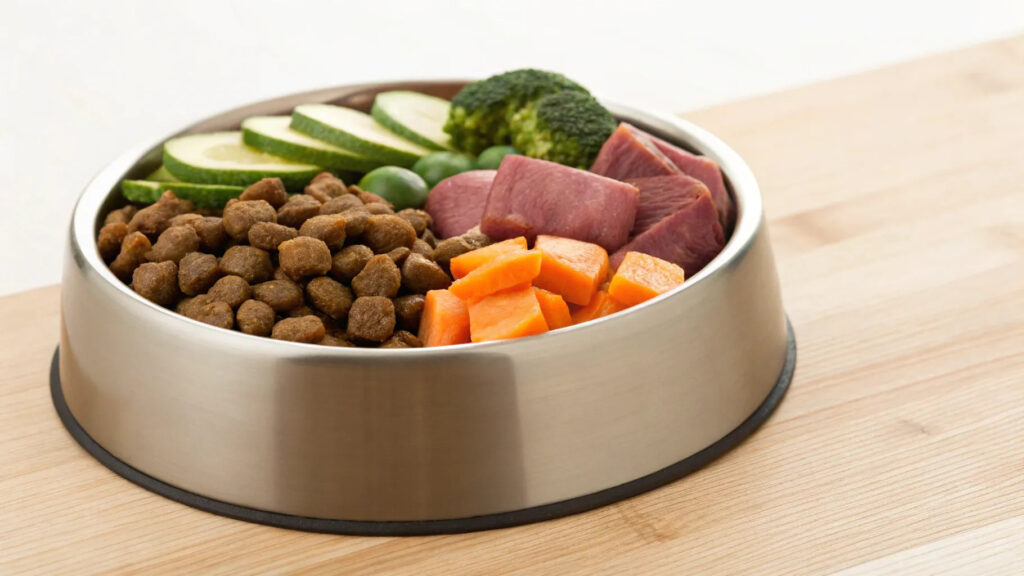
In our daily feeding routines on our 10-acre country homestead, my wife and I utilize a flexible, high-tier nutritional framework. Akitas possess sensitive digestive tracts that require easily digestible proteins. Therefore, we advise handlers to execute either a premium large-breed commercial kibble system or a highly structured raw food diet strategy.
Option A: Selecting Premium Large-Breed Commercial Kibble
If you prefer the stability of commercial manufacturing, you must select a dry kibble formulated explicitly for large working breeds. The diet must feature real meat as the primary ingredient and maintain a strict protein ceiling of 26% to 28%.
- The Structural Core Benefit: Specialized kibble guarantees a balanced calcium-to-phosphorus ratio, preventing painful growth disorders like panosteitis.
- Handler Guideline: We advise splitting the daily rations into two equal meals to minimize the dangerous risk of gastric dilatation-volvulus (bloat).
Option B: Executing a Structured Raw Food Diet Strategy
For handlers seeking to mirror ancestral canine nutrition, a balanced raw framework delivers exceptional physical benefits. Specifically, a raw strategy must strictly follow a 80/10/10 biological breakdown matrix: [80% Muscle Meat] → [10% Whole Bone] → [10% Secreting Organs] . Consequently, raw feeding enhances muscle tone, drastically reduces stool volume, and promotes excellent dental hygiene. However, handlers must source clean, human-grade ingredients to prevent bacterial imbalances.
Nutrition and training go hand in hand. Learn how we build Akita training protocols from day one.
Mandatory Medical Vetting and Hereditary Health Clearances
Another crucial question sent to our inbox involves the real financial investment required to maintain a massive guardian dog throughout their lifetime. Our short answer focuses on comprehensive prevention. Low-quality backyard breeding operations completely skip vital diagnostic testing, leaving owners to face catastrophic veterinary bills down the road. Before you commit to any breeder, view current litter documentation to see health clearances and temperament evaluations in writing.
Proactive Diagnostic Screening Milestones
Because structural joint laxity and organ failures are heavily hereditary, my family strictly breeds foundation pairs with documented health histories. We clear our sires and dams through recognized national medical channels to protect the integrity of our lines.
- Orthopedic Hip Certification: Sires and dams must clear formal OFA or PennHIP imaging evaluations past 24 months of age to verify normal joint ball-and-socket configuration.
- Autoimmune Thyroiditis Panel: A complete blood serum analysis must clear the parents of hereditary thyroid failures before any preservation pairing is finalized.
- Comprehensive DNA Diagnostics: Our breeding lines undergo full genetic panels to clear mutations like Sebaceous Adenitis and Degenerative Myelopathy.
The American Kennel Club health resources provide additional guidance on breed-specific health testing. We also encourage all prospective families to review the Akita Club of America health survey data. We have fifteen years of experience with this breed. To see how we apply this knowledge, meet our family and review our credentials .
Financials, FAQs, and Backlink Registry
A uniform preservation cost recovery fee of $850 applies to companion alignments to offset programmatic bloodline maintenance. This fee covers the health testing, veterinary care, and socialization protocols invested in every litter.
H3: Annual Care Investment Overview
| Expense Category | Primary Care Material Included | Estimated Annual Cost |
|---|---|---|
| Nutritional Supply | Premium large-breed commercial kibble / Raw proteins | $1,200 – $1,800 |
| Preventive Medicine | Annual vaccinations, heartworm controls, vet checks | $350 – $600 |
| Joint & Coat Support | Pure Omega-3 wild fish oils, glucosamine tabs | $200 – $400 |
| Expense Category | Primary Care Material Included | Estimated Annual Cost Baseline |
|---|---|---|
| Nutritional Supply | Premium large-breed commercial kibble / Raw proteins | $1,200 – $1,800 |
| Preventive Medicine | Annual vaccinations, heartworm controls, vet checks | $350 – $600 |
| Joint & Coat Support | Pure Omega-3 wild fish oils, glucosamine tabs | $200 – $400 |
Frequently Asked Questions
Q: At what age should I transition my puppy from large-breed puppy food to adult food?
A: We advise transitioning your companion to a high-quality adult formulation around 10 to 12 months of age to prevent accelerated growth spikes that can impact delicate joint cartilage structure.
Q: What standard joint supplements do you recommend for growing Akitas?
A: Begin daily supplementation with high-quality Omega-3 fatty acids and glucosamine around 6 months of age. This proactive step helps sustain long-term joint health metrics and double coat density.
Q: Can a raw diet cause nutritional deficiencies if not formulated professionally?
A: Yes. A raw food diet strategy will provide required vitamins only if it incorporates diverse secreting organs and leafy green purees. Never rely strictly on lean muscle meat alone.
Continue Learning
Meeting strict Akita health requirements is a lifelong commitment that demands proactive care, structural nutrition, and absolute transparency. By providing a meticulous balance of large-breed commercial kibble or an ancestral raw food diet strategy, you build a resilient foundation for your companion dog.
- Ready to explore current availability? View our current litter documentation at Available Companions .
- Want to know who we are? Meet our family and review our credentials at About Our Akita Breeders .
- New to the breed? Start with our comprehensive American Akita breed education hub at Akita Puppy Care Guide .
Before committing to any breeder, we encourage you to independently verify health clearances through the Orthopedic Foundation for Animals . Focus on real data, safeguard your family line, and raise your pack with complete confidence.

0 Comments